ISA-88 Batch Control Explained for Software Engineers
ISA-88 (S88) isn't just regulatory jargon—it is one of the cleanest separation-of-concerns and state-machine patterns in industrial engineering. Here is how it works, translated for software engineers.
If you come from a software engineering background and take a job in pharmaceutical, food and beverage, or specialty chemical manufacturing, you will quickly hear three numbers repeated in almost every architecture meeting: ISA-88 (often written S88).
To a traditional backend or web developer, ISA-88 can sound like a wall of regulatory jargon. In reality, it is one of the cleanest separation-of-concerns and state-machine patterns ever designed for physical systems.
Here is how ISA-88 works—translated into concepts every software engineer already understands.
Why Batch Manufacturing Needs a Standard
Unlike continuous manufacturing (such as an oil refinery running 24/7 on steady-state loops) or discrete manufacturing (like stamping car doors), batch manufacturing produces finite quantities of material by executing a sequence of steps on shared equipment.
Without a clear architecture, automation engineers end up hardcoding recipes directly into PLC ladder logic—meaning every new product flavor or drug formulation requires rewriting and re-validating controller code. ISA-88 solves this by cleanly separating what you want to make (the Recipe) from what your plant can physically do (the Equipment).
1. The Physical Model: Your Plant's Object Hierarchy
ISA-88 organizes physical plant hardware into a strict tree, much like object-oriented composition:
- Process Cell: The entire batch production area (e.g., Fermentation Suite A).
- Unit: A major piece of equipment that operates independently on one batch at a time (e.g., Reactor R-101 or Mixer M-202).
- Equipment Module: A functional group of devices that performs a specific minor task (e.g., Jacket Heating/Cooling Loop or Ingredient Dosing Manifold).
- Control Module: The lowest-level physical actuators and sensors (e.g., a single valve, pump, agitator motor, or temperature transmitter).
Think of a Unit as a service class, Equipment Modules as its internal helper methods, and Control Modules as the hardware drivers.
2. The Procedural Model: Recipes as Composable Workflows
Instead of hardcoding sequences, ISA-88 models a Recipe as a four-level execution tree:
- Procedure: The full recipe to make a batch (e.g., Produce Vaccine Lot X).
- Unit Procedure: The portion of work that runs on a single Unit (e.g., Compound in Reactor R-101).
- Operation: A major processing step that produces a physical or chemical change (e.g., Charge Ingredients, Heat & Agitate, Cool & Transfer).
- Phase: The smallest reusable building block—an atomic command sent down to the PLC or DCS (e.g.,
ADD_WATER(liters=500),HEAT_TO(temp=85C, hold_min=20)).
This is the key insight for software engineers: Phases are your API endpoints exposed by the control system. Process engineers can then compose new Recipes at the MES or Batch Server layer by reordering Phases and passing different parameters—without touching a single line of PLC code.
3. The ISA-88 State Machine
Every Phase, Operation, and Unit Procedure in ISA-88 runs on a standardized state machine. If you have ever built workflow engines or async job runners, this will feel immediately familiar:
- Normal States:
IDLE→RUNNING→COMPLETE - Operator / Exception States:
PAUSING→PAUSED,HOLDING→HELD,RESTARTING,STOPPING→STOPPED,ABORTING→ABORTED
Why does this matter for IIoT and DataOps engineers? Because when you ingest batch telemetry into a historian (like TimescaleDB or Ignition), raw temperature and pressure values are hard to interpret without state context. Knowing when a Phase transitioned from RUNNING to HELD—and logging the Batch ID, Unit ID, and Phase ID alongside every sensor reading—is what turns raw time-series data into actionable Golden Batch analytics and electronic batch records (EBR).
Why ISA-88 Matters for Your Career
Whether you are building Unified Namespace (UNS) payloads in HighByte, scripting Ignition batch screens, or integrating an MES with a DeltaV or Rockwell batch server, understanding ISA-88 lets you speak the same language as process engineers and plant operators—and design software that respects how factories actually run.
If you are looking for roles working with batch systems, MES, or industrial DataOps, browse the latest open positions on IIoTjob.
Image Credits & Open Source Licensing:
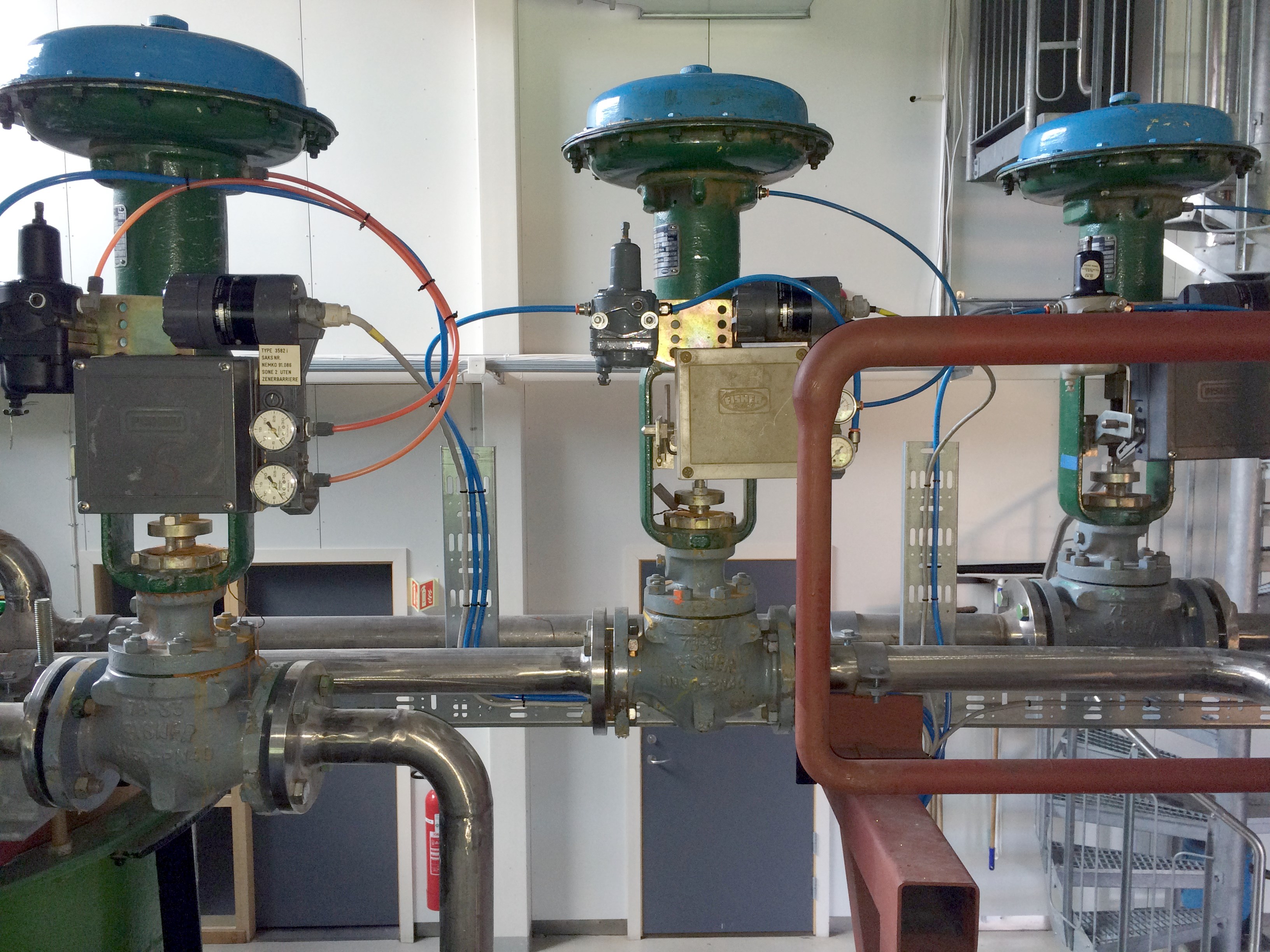
- Featured Header: Industrial process control valves and piping. Photo: Bitjungle (CC BY-SA 4.0).
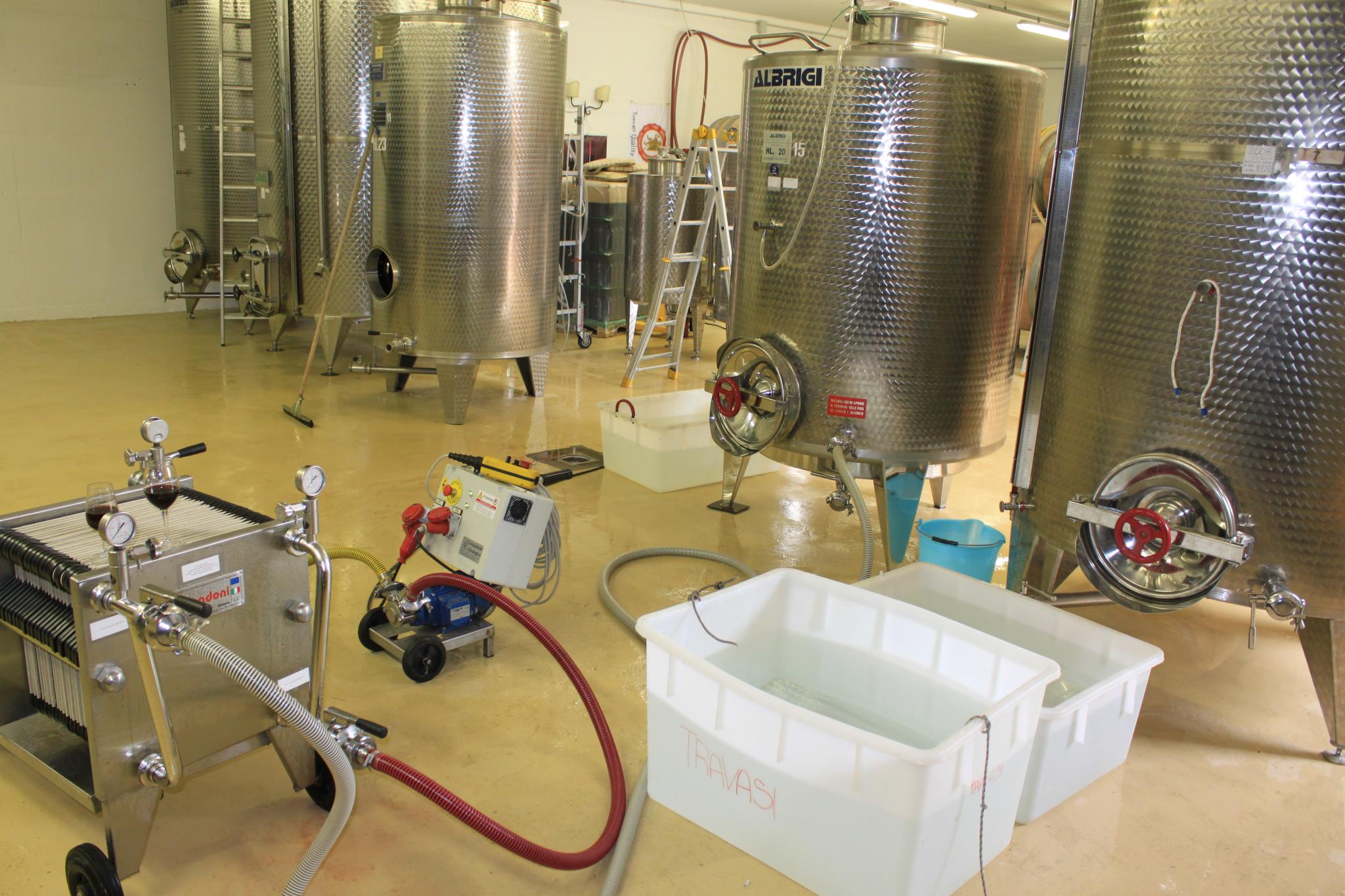
- Batch Vessels: Stainless steel batch fermentation vessels and filtration unit. Photo: Agne27 / Wikimedia Commons (CC BY-SA 2.0).